
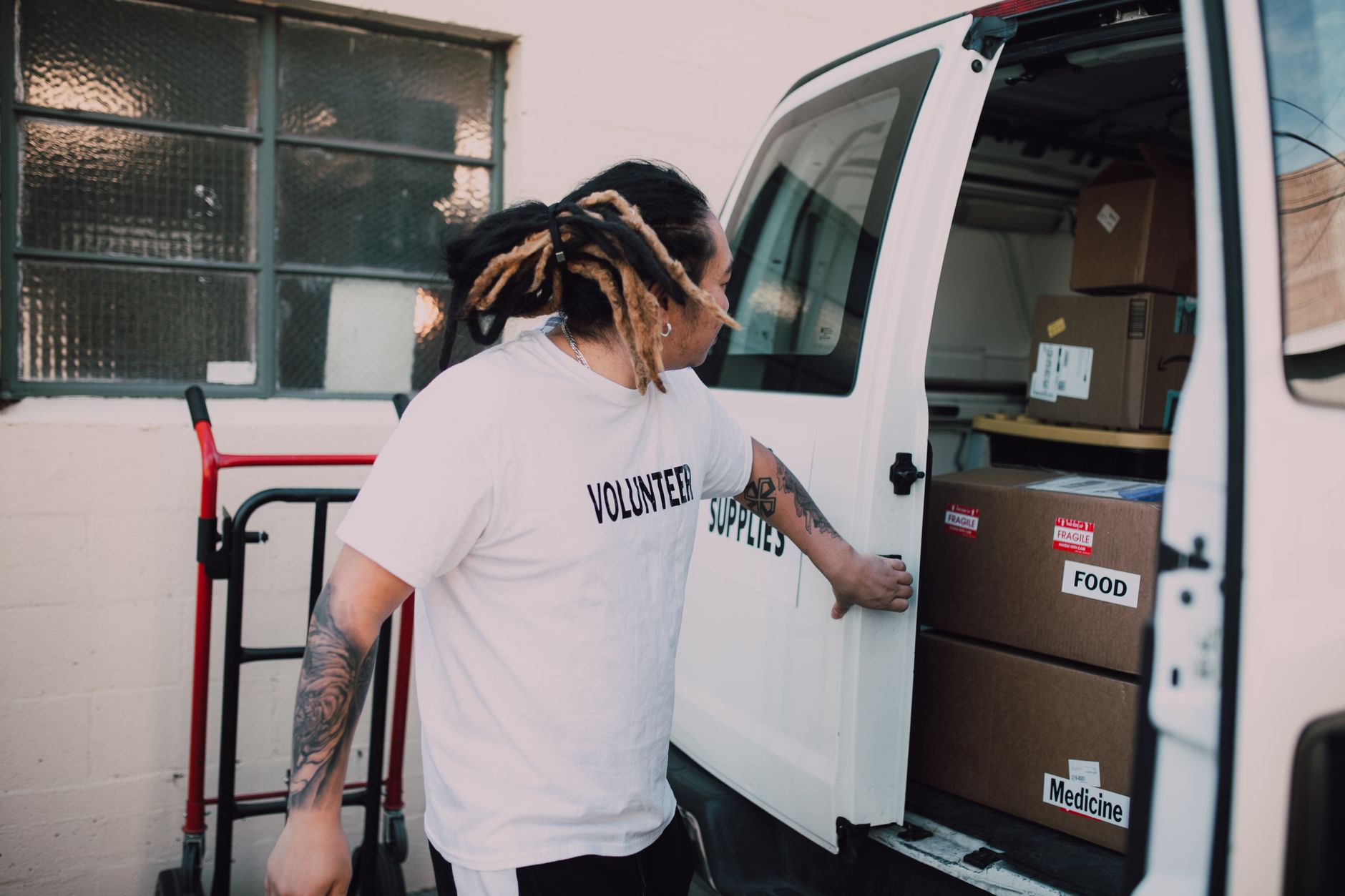
Every December, someone at a nonprofit board meeting in Visalia asks the same question: can I deduct the time I spent volunteering? The honest answer is no, and it surprises people every time. The IRS values your labor at exactly zero dollars, no matter how many hours you logged coaching Little League, tutoring at a Tulare County literacy program, or serving on the finance committee of a local food bank. But that’s not the end of the story. The money you spent out of your own pocket to do that volunteer work is often fully deductible, and most people either don’t know it or don’t track it well enough to claim it.
This gap between what volunteers assume and what the tax code actually says costs California taxpayers real deductions every filing season. It also creates confusion for board members and business owners who serve nonprofits and want to do it right. Here’s what the IRS actually allows, and how to document it so the deduction survives a closer look.
Your volunteer hours have real value, just not to the IRS
The rule is stated plainly in IRS Publication 526: you cannot deduct the value of your time or services, no matter what your normal hourly rate would be. A CPA who spends fifteen hours preparing financial statements for a nonprofit board can’t deduct what those fifteen hours would have billed a paying client. Neither can an attorney who reviews a contract pro bono, or a contractor who donates a weekend of labor to a Habitat for Humanity build in Kern County.
This trips people up because it feels backward. If you wrote a check for $1,500 to a qualified charity, you’d deduct the $1,500 without hesitation. If you instead donated $1,500 worth of your professional time, you get nothing on your return, even though the charity arguably received the same value. The IRS draws this line because valuing donated services would be nearly impossible to verify consistently, so it simply doesn’t try. What it will let you deduct is what actually left your bank account.
Which volunteer costs you can write off
Once you separate your time from your money, the deductible list gets longer than most volunteers expect. To qualify, the expense has to be unreimbursed, directly connected to the volunteer work, incurred only because of the volunteering (not something you’d have paid anyway), and paid to or for a qualified 501(c)(3) organization.
| Expense | Deductible? | Notes | |—|—|—| | Supplies you buy for a volunteer project | Yes | Paint for a habitat build, snacks for a shelter, printer paper for a board packet | | Uniforms required for volunteer service | Yes | Scout leader uniforms, similar required attire not suitable for everyday wear | | Mileage driving to and from volunteer work | Yes | At the fixed charitable mileage rate, discussed below | | Travel costs for an out-of-town volunteer trip | Yes, if no significant personal vacation element | Airfare, lodging, and meals for a legitimate volunteer trip | | The value of your professional time or labor | No | Applies even to CPAs, attorneys, and contractors donating skilled work | | Lost income from taking unpaid leave to volunteer | No | The IRS doesn’t recognize opportunity cost as a contribution | | Personal expenses only loosely tied to volunteering | No | A babysitter so you can attend a two-hour board meeting typically doesn’t qualify |
A few examples make this concrete. A board member for a Fresno County nonprofit who buys $80 in name tags and folders for an annual fundraiser can deduct that $80. A volunteer coach who purchases $200 in equipment the league doesn’t reimburse can deduct that too. A CASA volunteer who drives her own car to court hearings and family visits can deduct the mileage for every one of those trips, even though she can’t deduct a single hour of her time in the courtroom.
The charitable mileage deduction and other travel costs
The charitable mileage deduction is one of the most overlooked write-offs available to volunteers, largely because most people assume mileage rules only apply to business driving. They don’t. If you drive your own vehicle in service of a qualified charity, you can deduct 14 cents per mile, a rate set by statute rather than adjusted annually for inflation the way the business mileage rate is. It’s lower than the standard business rate, but it adds up. A volunteer who drives 40 miles round trip to deliver meals twice a week logs roughly 4,000 miles a year, which works out to a $560 deduction most people never claim.
Parking fees and tolls incurred while volunteering are deductible in addition to mileage. If you’d rather not track mileage, you can deduct actual gas and oil costs for the trip instead, though you can’t deduct depreciation, insurance, or general maintenance.
Out-of-town volunteer travel follows a stricter standard. If a nonprofit sends you to a conference or a disaster relief site and there’s no significant element of personal vacation, your airfare, lodging, and meals are deductible. If your spouse tags along for a week at the beach afterward, only the costs tied directly to the volunteer portion count. The IRS looks closely at trips that mix charity work with leisure, so keep the two clearly separated in your records.
Records the IRS wants before it believes you
Deductions for unreimbursed volunteer expenses get disallowed more often for weak documentation than for being invalid in the first place. The IRS requires written acknowledgment from the organization for any single contribution of $250 or more, and that applies to out-of-pocket expenses too, not just cash gifts. If your volunteer mileage or supply costs for one organization cross that threshold over the year, get a letter from the nonprofit confirming your role, the nature of the expenses, and that you received nothing of value in return.
For smaller, ongoing costs, keep a simple log: date, organization, purpose of the expense, amount, and receipt. A mileage log with dates and destinations works the same way. This doesn’t need to be elaborate. A notes app entry after each volunteer trip, backed up by receipts in a folder, holds up fine if the return is ever questioned. IRS Publication 526 walks through the substantiation rules in detail, and the IRS Charities & Nonprofits hub is the right place to confirm an organization’s tax-exempt status before you start tracking anything.
Board members and nonprofit professionals face extra rules
Business owners and professionals who sit on nonprofit boards, a common arrangement for the attorneys, physicians, and consultants we work with across Tulare, Kings, and Fresno counties, run into a specific wrinkle. Board service itself isn’t a business expense just because it generates goodwill or referrals. The deduction still runs through the charitable contribution rules covered above, not through a business deduction on a Schedule C or corporate return.
That distinction matters for anyone running a multi-entity structure or an S-corp, where it’s tempting to run volunteer-related costs through the business simply because that’s where the checkbook lives. Reimbursed expenses paid by the business aren’t deductible by you personally, and expenses paid by the business on the nonprofit’s behalf need to be tracked as a business contribution, with its own set of substantiation rules. If your volunteer work touches multiple entities or crosses state lines, this is exactly the kind of detail worth reviewing with your accountant before it becomes a filing-season surprise.
Common Questions
Can I deduct the value of professional services I donate to a nonprofit? No. The IRS does not allow a deduction for the value of your time or professional services, even for licensed professionals like CPAs, attorneys, or architects donating billable-rate work. You can only deduct unreimbursed out-of-pocket expenses directly connected to that volunteer work, such as supplies or mileage.
What is the current charitable mileage rate for volunteer driving? The charitable mileage rate is 14 cents per mile, set by statute rather than adjusted yearly like the business mileage rate. You can deduct this rate for driving done in service of a qualified 501(c)(3) organization, plus any parking fees and tolls.
Do I need a receipt for every volunteer expense I want to deduct? Smaller expenses need a basic record: date, organization, purpose, and amount. Any single contribution of unreimbursed expenses totaling $250 or more requires written acknowledgment from the organization, per IRS Publication 526.
Can I deduct costs from a volunteer trip that included some vacation time? Only the portion tied directly to the volunteer work qualifies, and only if there isn’t a significant element of personal vacation in the trip overall. Mixing the two without clear records is one of the fastest ways to lose the deduction entirely.
If you volunteer regularly, sit on a nonprofit board, or run a business that supports charitable work across multiple entities, it’s worth a conversation before the deductions get lost in a shoebox of receipts. Aurora Consulting Group’s Enrolled Agents work with entrepreneurs and professionals throughout Visalia and Central California on exactly this kind of tax planning and strategy, and we’re glad to look at your specific situation. Contact us to get it on the calendar.